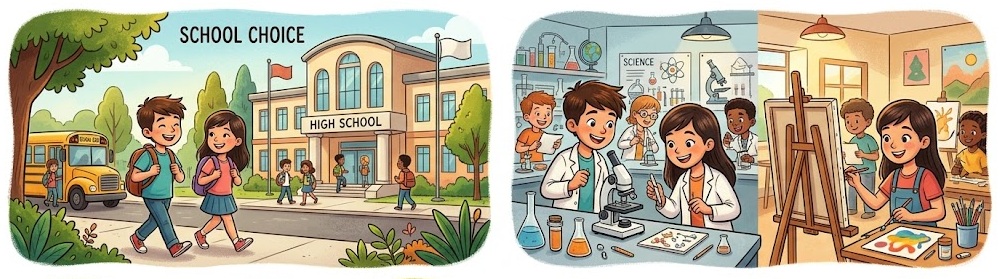
During adolescence, the choice of school has a profound impact on a child’s learning attitude, values, and long-term development. Factors such as a school’s ranking, tradition, educational philosophy, and curriculum design should all be carefully considered.
Some families prefer private schools—often elite institutions with high tuition—because of their concentrated educational resources and structured environments. Others choose public schools, which are more affordable and allow students to be exposed to a broader and more realistic social setting at an earlier stage.
Both private and public schools have their strengths and limitations. What truly matters is selecting a school that best fits the child’s personality, abilities, and the family’s core values, rather than simply following popular trends.
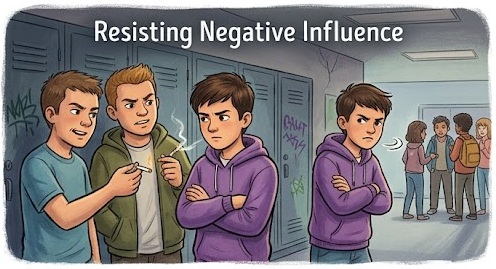
As children grow, the influence of peers and friends on their behavior and values can be just as strong as that of the family. In general, students at well-established private schools often come from relatively stable family backgrounds, which may reduce exposure to negative behaviors—but this is never a guarantee.
As the saying goes, “Those who stay close to vermilion turn red; those who stay close to ink turn black.” Parents should pay close attention to their children's friends—their speech, appearance, attitudes, and habits. When negative influences persist, timely guidance is essential to help children develop sound judgment, rather than ignoring the issue or resorting to blame.
The topics children discuss with their friends, the goals they pursue together, and the values they share all play a crucial role in shaping character. Adolescence is a formative period during which beliefs and identity gradually take shape, and peer relationships formed during this time may influence an individual for a lifetime.
For this reason, parents should place great importance on their children’s friendships. Through ongoing communication, observation, and guidance, parents can help their children strike a healthy balance between freedom and boundaries, ultimately fostering maturity, responsibility, and resilience in life.